 | Gomphus-A Blend of Function and Form
The spun and clipped deer hair body of the Gomphus allows for pedestrian retrieves coupled with sinking lines to mimic the plodding nature of the nymph as it crawls along the bottom.
Read Full Story |
 | The Double Bunny-A Rabbit Sandwich
Scott Sanchez’s Double Bunny is a simple creative amalgamation of two rabbit strips cemented along a hook. Since its initial inception, Scott’s Double Bunny has caught well over 30 species.
Read Full Story |
 | The Jig Is Up
Flies tied using slotted beads and up eye jig hooks offer a number of advantages. From a practical perspective jig nymphs ride hook point up, reducing the risk of snagging and fouling. A good characteristic for any nymph tumbling through snag infested reaches of a river bottom where trout prefer to reside.
Read Full Story |
 | The Rhea Deal
I have always been enamoured by the elegant flowing look of a traditional Spey pattern and in recent years, Intruder patterns featuring supple flowing rhea hackle.
Read Full Story |
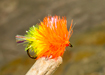 | The Tequila Blob
On those days when trout seem reluctant to play, patterns such as the Blob stripped through the water using brisk strip pause retrieves often saves the day.
Read Full Story |
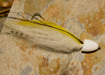 | The Miyawaki Beach Popper
The dry fly has been the cornerstone presentation for river and stream trout since the dawn of fly fishing. This allure also transfers to other species and environments too, as Beach Popper originator Leland Miyawaki can attest.
Read Full Story |
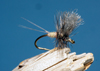 | Split Decision, A Guide to Dividing Tails
The tails on most dry flies intended to imitate mayfly duns or spinners serve two purposes. Suggest the tails of the natural insect and serve as outriggers, stabilizing the fly when sits on the water.
Read Full Story |
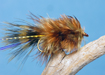 | Waste Troll Leech-Camo
Successful leech patterns must be animated, through our retrieves and the materials we choose to tie them with.
Read Full Story |
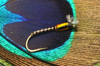 | How to Strip Peacock Herl-The Traffic Buzzer
The Traffic Light Buzzer is an English pattern, named for its distinct shimmering red holographic Mylar and mirage opal Mylar overlay wingcase.
Read Full Story |
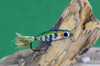 | The Foam Minnow
In order to be successful using minnow or fry patterns it is important to keep your fly high in the water. Line choice helps but having a buoyant pattern is a definite asset.
Read Full Story |
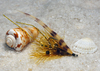 | The Bone Collector
The basic Crazy Charlie style has spawned countless variations. One of the best is Kenzie Cuthbert’s Eyes-n-Tubes Bone Collector
Read Full Story |
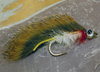 | The Zonker-The Subsurface Seductress
The late Dan Byford created the Zonker in the mid 70’s. His unique design incorporating a rabbit fur strip secured along the top of a Mylar tube body was a departure from the typical hair wing streamers of the day. Dan’s design has endured the test of time proving itself not only on trout but other species too.
Read Full Story |
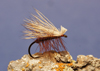 | The Elk Hair Caddis-Don't Leave Home Without It.
Designed by the late Al Troth, the Elk Hair Caddis is a dry fly every fly fisher should have in their fly box, both lake or stream.
Read Full Story |
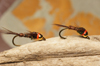 | The Evolution of a Nymph
Today, no fly box would be complete without a comprehensive selection of Pheasant Tail Nymphs. A Pheasant Tail Nymph is one of my favorite river or stream patterns. It is also an excellent lake pattern, particularly when Callibaetis nymphs are active. During my travels, flashback versions have also served me well when trout are focused on zoo plankton and small baitfish.
Read Full Story |
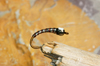 | The Trick is in the Taper
A slender natural taper was one of the critical traits common to all successful chironomid pupa patterns.
Read Full Story |
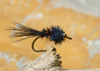 | Micro Leeches
Hanging leeches under indicators is now common on most western Canadian stillwaters. In recent years, tiny micro leeches have evolved adding yet another dimension to this deadly presentation option. <br>
Read Full Story |
 | Driving Fish Crazy-The Crazy Charlie
The Crazy Charlie is an easy tie, consisting of three primary components, a pair of eyes, wing and body. Most Crazy Charlie’s are tied on a 1xl straight eye saltwater streamer hook, #2 through #10.
Read Full Story |
 | Skating and Popping for Steelhead
The Ska-opper is another innovative creation from Scott Howell’s fly box aimed at enticing steelhead to the surface. After watching steelhead after steelhead crash traditional Styrofoam floats as they chugged and popped across the surface during the retrieve the die was cast in Scott’s mind. In Scott’s words, “It didn’t take too long before I was trying to match the dink float hatch.” <br>
Read Full Story |
 | Bloodworm Basics
Most fly fishers to use prefer larger or more popular staples; leeches, dragon nymphs and chironomid pupa. But there is one staple that consistently slides under the radar of many, chironomid larva or bloodworm. <br>
Read Full Story |
 | The Polar Popper
When it comes to open ocean coho, Kelly Davison enjoys taking these aggressive predators on top water flies. One, if not perhaps his favorite patterns, is a variation of a Clint Derlago design Kelly christened the Polar Popper.
Read Full Story |
 | Polish Nymphs
I used to use split shot all the time but my philosophy has changed. I now use weighted patterns. By tying a pattern in a number of different weight configurations I can explore various depths and current flows.
Read Full Story |
 | Flies With Eyes
Scatter a handful of flies onto a table in front of a group of curious onlookers and they naturally gravitate towards the most realistic looking patterns. Especially flies featuring a pair of eyes. It seems people are attracted to fly patterns that stare back at them.
Read Full Story |
 | Cast In Stone-Tying Stone Fly Nymphs
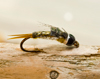
The presence of stonefly nymphs in a body of water is a testament to its water quality. Like us, stonefly nymphs need cool, oxygenated water to survive. The kind of water found in fast flowing sections of a river or stream.
Read Full Story |
 | Rigging Intruders
Originally, Intruders were rigged by running the leader or tippet material through the hook eye externally along the top of the fly through a small loop of back or stiff mono tied in at the rear of the hook and then through a small section of tubing. The hook was then tied on and pushed into the junction tubing which was in turn stabbed onto the hook shank, similar in some respects as to how tube flies are rigged.
Read Full Story |
 | Thunder Struck-Thunder Creek Minnow
In the early sixties Keith Fulsher was dissatisfied with the look of the minnow patterns of his day. He was looking for a simple, sparse, slender design that better imitated the larger head and eyes of the minnows he observed. Building on similar hairwing designs he had seen, Keith settled on a unique bullet head streamer now known as the Thunder Creek Minnow.
Read Full Story |
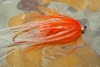 | The Squidro
Scott Howell is a renowned steelhead guru, Oregon guide and innovator amongst the steelhead fraternity. Along with fly fishers such as Ed Ward, Scott has influenced the design of many steelhead patterns today, particularly Intruders.
Read Full Story |
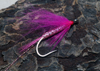 | Pretty In Pink-Foxy AGP
Many pink salmon patterns share one common trait, their color, pink. Although pink patterns take their share of pink salmon other colors such as white, green and blue produce too. Most of my pink patterns lean to the pink side of the color chart, either hot pink or a lighter bubble gum or shrimp pink. If possible, I blend both shades of pink into my patterns so they are prepared for varied water conditions or pink salmon preference.
Read Full Story |
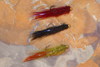 | Balanced Flies
Suspending flies beneath an indicator is stillwater presentation staple. The challenge with most flies, with the exception of chironomid pupa patterns, is the unnatural vertical manner in which they hang. Most stillwater prey moves horizontally. Spokane Washington fly fisher Jerry McBride recognized this failing developing the balancing techniques my balanced flies are based upon.
Read Full Story |
 | Dry Fly Attractors-The Chernobyl Ant
Cruising though the dry fly bins in most fly shops reveals some bizarre looking patterns, Amy’s Ant, the Club Sandwich and the Fat Albert to name a few. Large, unique and unorthodox, these patterns share two common denominators. They float like corks and utilize large quantities of foam. In recent years foam bodied dry flies have exploded in popularity. This explosion can be traced back to one particular fly designed for the Green River in Utah, the Chernobyl Ant.
Read Full Story |
 | Mass Production-Using Weight Creatively for Sinking Flies
It has been said that trout spend up to 90% of their time feeding beneath the surface, often just above the bottom. With this fact in mind it only makes sense to want to get our flies down to the fish. For river and stream patterns this means incorporating weight, and the faster the flow of water is the greater the mass required to get nymphs bouncing and tumbling on or just above the bottom.
Read Full Story |
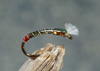 | Epoxy Buzzers
Clear water lakes can be tough and along with some of our busier lakes slender realistic patterns in conjunction with refined presentation techniques are often required for consistent success. At times, wary trout seem to avoid beadheads. Enter the epoxy style pupa.
Read Full Story |
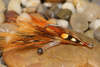 | Creating Crayfish
Trout and bass, brown trout and smallmouth bass in particular, consume large numbers of crayfish. Smallmouth bass love crayfish. They are arguably their favourite food source. If you plan on chasing smallmouth or visiting a river or lake where crayfish exist reserve space in your fly box for a crayfish imitation or two. For those chasing carp on the fly crayfish patterns are fly box staples.
Read Full Story |
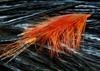 | General Techniques
The General Practitioner or ‘GP’, as it is affectionately known to many, is a staple pattern for many west coast steelhead fly fishers. The GP was originally designed as a prawn or shrimp imitation for Atlantic salmon by an Englishman, Colonel Desmond Drury in the early fifties
Read Full Story |
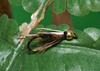 | Reinforcing Herl
Peacock herl possesses a beautiful iridescence that fish find hard to resist. Mother Nature’s Crystal Flash, peacock herl offers a wide array of uses including bodies, thoraxes on some of our favourite nymphs. Without reinforcement peacock based patterns such as the Prince Nymph become a tattered mesh, forced into retirement far before their time.
Read Full Story |
 | Beach Flies
At first you might think that successful flies for salmon must be large in order to entice a take. Not so when it comes to beach flies. Beach fly criteria is unique when compared to open ocean flies. Beach conditions have had an effect on pattern development and subsequent success.
Read Full Story |
 | Looped Tippet Droppers
When fishing without indicators I use either a dropper tied off a Triple Surgeon’s Knot or probably my favourite system, a section of tippet looped around the main leader I call the ‘Looped Tippet Dropper.’ A system borrowed from Czech or European Nymphing.
Read Full Story |
 | Calamari Anyone?
All five salmon species love ‘calamari’ in their diets as well as bottom fish including the myriad of rockfish species. Both commercial and recreational trollers have used Hootchies, a plastic squid imposter, for years with staggering success. Although proven patterns such as Deceivers and Clouser Minnows are passable squid imitations if you are serious about saltwater you should include your own feather and synthetic Hootchies.
Read Full Story |
 | No Hackle Dries
Breaking away from traditional hackled flies offers picky trout an alternative look that they often take without hesitation. When prospecting for trout in calm, slow moving or still water no hackle dries are tough to beat.
Read Full Story |
 | Antistatic Bag Pupa
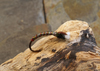
Antistatic bag pupa patterns do an excellent job initiating staging and elevating chironomid pupa. Chironomid pupa used trapped air and gases to aid their pupal ascent and final transformation into winged adult. It takes a while, typically 3-4 days, for the pupa to gather enough air and gases for their perilous emergence trek.
Read Full Story |
 | How Do You Like Your Eggs?
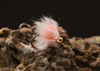
Experienced drift fishers who ply B.C.’s rivers and streams in search of winter steelhead understand the value of eggs. Either natural roe or coloured yarn fashioned to represent roe. Fly fishers also know the value of eggs, as a result an omelette of egg patterns and materials are readily available.
Read Full Story |
 | Tube Fly Basics
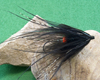
A tube fly is nothing more than a fly tied onto a tube as opposed to a traditional hook shank. Modern tube flies trace their history back to the late 1940’s, just after World War Two. Actual tube fly history traces its roots even further. Northwest first nation’s anglers used tube flies tied onto feather quills for Pacific salmon. Tube flies are popular with Atlantic salmon fly fishers and have become popular pattern selections for West Coast steelhead fly fishers as well.
Read Full Story |
 | Stillwater Kit Bag
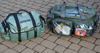
Fly fishers have no control over environmental variables such as water temperature, barometric pressure and wind. Equipment on the other hand is controllable. From personal experience focusing on what can be controlled better prepares an angler for what cannot.
Read Full Story |
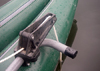 | Pontoon Boat Control
At times rear anchored pontoon boats spin and sway around the rear anchor, challenging your presentation control and patience. Adding a second anchor cleat to the front frame of your pontoon boat provides a simple cure to annoying spin and sway.
Read Full Story |
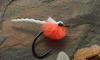 | Furled Flies
Ken Hanley, author of the book, Tying Furled Flies for Trout, Bass and Steelhead created his Furled Alevin using Antron yarn. It is an excellent alevin imitation. Slender tapered and compact, furled bodies offer many tying applications besides alevin patterns.
Read Full Story |
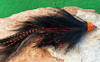 | Ahead By a Hare
There are a number of fly tying materials offering a wide degree of diversity and value to all fly tyers. Peacock, pheasant tail and rabbit fur are three such examples. All are readily available and easy to work with.
Read Full Story |
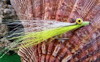 | Clouser Deep Minnow-Chartreuse/White
Bob Clouser’s Deep Minnow is probably the best saltwater baitfish pattern in use today; with over 80 species to its credit. Lefty Kreh rates the Clouser Minnow as the best saltwater fly available today, higher even than his famed Deceiver.
Read Full Story |
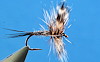 | Dry Fly Basics
No fly selection would be complete without a handful of Adams. Although most often thought of a consummate mayfly imitation the original Adams was intended to suggest caddis.
Read Full Story |
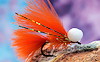 | Buoyant Flies
Since its initial conception the Booby has evolved into a variety of styles and practically any pattern can be 'Boobied' by the simple addition of foam eyes. Upon discovering this pattern over 10 years ago, it has been a constant fly box staple.
Read Full Story |
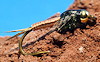 | Wired For Trout
Colorado fly fisherman and tyer John Barr created his wire bodied Copper John to plunge and drift amongst the bottom rubble and debris. His brilliant merger of the Brassie, Prince Nymph, and Pheasant Tail Nymph has become arguably the most popular river and stream nymph today.
Read Full Story |
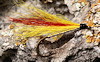 | Hair Wing Streamers
Hair wing streamers are simple and uncomplicated, consisting of nothing more than a flashy body and sparse hair wing. Original bodies were constructed from silver or gold tinsel depending upon the pattern recipe.
Read Full Story |
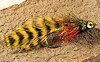 | Mastering Matukas
Matukas are a tying style consisting of 2 or more feathers or a fur strip bound vertically along the body of a fly using wire, tinsel, Crystal Flash or other ribbing material.
Read Full Story |
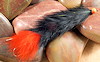 | Moals-Steelhead Vermin
Designed and pioneered by American guide and industry sales rep, Derek Fergus, the MOAL features an ingenious combination of a short shank hook for a forward foundation, coupled with a loop of braided line for a core wrapped with cross cut rabbit strips.
Read Full Story |



